Comments
No comments yet! Why don't you be the first?

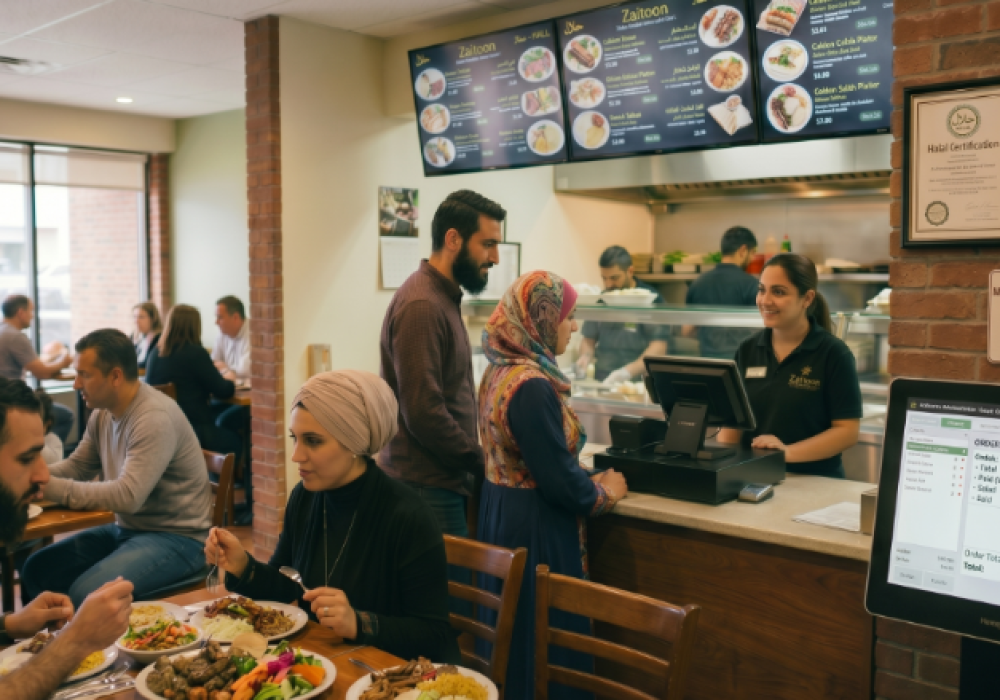
If you run a halal restaurant in Canada or the United States, you already know that generic POS systems weren't built with you in mind. They don't understand halal ingredient compliance, they can't track recipe costing down to the gram, and they give you no way to manage the unique operational demands of a halal kitchen.
This guide covers what to actually look for in a POS system built for halal food service — and why smart inventory and recipe costing are the two features that matter most.
Why Generic POS Systems Fall Short for Halal Restaurants
Most restaurant POS platforms were designed for mainstream food service. For a halal restaurant owner, that creates real problems: no way to flag non-halal ingredients during inventory intake, recipe costing tools that don't account for halal-certified supplier sourcing, inventory systems that can't verify ingredient compliance at the point of depletion, and no multilingual menu support for diverse Muslim communities.
With over 10,000 halal restaurants now operating across North America — and the Canadian halal food market projected to exceed $4.3 billion by 2029 — the demand for purpose-built software is clear. The supply hasn't caught up.
The Two Features Every Halal Restaurant POS Must Have
1. Smart Inventory — Real-Time Stock Tracking That Keeps You Compliant
For a halal restaurant, inventory isn't just a logistics problem. It's a compliance problem.
When your chicken supplier changes and a new batch comes in, you need to know immediately what's on your shelves, where it came from, and whether it's been properly logged. Manual spreadsheet tracking can't do that reliably — and a missed discrepancy can cost you your halal certification.
A smart inventory system for halal restaurants should track every ingredient in real time as dishes are sold, send low-stock alerts before you run out of certified halal products, give you a full audit trail of what entered and left your kitchen, and be accessible from anywhere — whether you're at the restaurant or not.
When your inventory moves automatically with every sale, you always know exactly what's on hand. If a halal-certified ingredient depletes faster than expected, the system flags it immediately — giving you the chance to investigate before it becomes a compliance issue.
2. Recipe Costing (Tech Cards) — Portion Control and Halal Traceability in One
A recipe card — also called a tech card — is a precise specification of every ingredient in a dish, measured to the gram. For most restaurants it's a food cost tool. For halal restaurants, it's also a traceability tool.
When a recipe card is linked to your POS, every time a dish is sold, the system automatically deducts the exact quantities of each ingredient from your inventory. Sell a plate of lamb kebab — the system removes 200g of halal lamb, 15g of spice blend, and 30g of sauce. Nothing is estimated. Nothing is forgotten.
This matters for halal operations in two specific ways.
Portion consistency — Every dish uses exactly what the recipe specifies. If portions start drifting, your food cost rises and your inventory numbers stop making sense. The recipe card is the reference point that keeps everything aligned.
Ingredient traceability — Because the system knows which ingredients go into which dish, you always have a clear line from customer order back to the certified halal product that was used. That's the kind of documentation that supports halal certification audits.
What This Looks Like in a Real Halal Kitchen
Say your restaurant sells 60 portions of chicken shawarma per day. Your recipe card specifies 180g of halal chicken thigh, 12g of shawarma spice blend, 25g of garlic sauce, 1 flatbread, and 40g of pickled vegetables per portion.
By end of service, your POS has automatically deducted 10.8kg of halal chicken and everything else — precisely, per the recipe. You can check remaining stock from your phone. If chicken is running low before you'd expect, you know about it before the dinner rush — not after.
Key Features to Look for in a Halal Restaurant POS
When evaluating any POS system for your halal restaurant, prioritize real-time inventory deductions tied directly to menu items sold, recipe card integration with gram-level precision, cloud access so you can monitor operations remotely, low-stock alerts for halal-certified ingredients, no monthly subscription fees, QR ordering and multilingual menus to serve diverse Muslim communities, a kitchen display system to eliminate paper tickets, and deep analytics on dish profitability, staff performance, and peak hours.
Tiponline POS: Built for Halal Restaurant Operations
Tiponline POS is a cloud-based restaurant management system designed for halal and independent food service operators in Canada and the US. It includes smart inventory with real-time deductions, full recipe card integration, automatic low-stock alerts, QR ordering, a kitchen display system, and deep analytics — all without a monthly subscription fee.
You can run it on your existing hardware without buying proprietary equipment. Halal restaurant owners can access their inventory, sales data, and reports from anywhere, at any time.
See how it works at pos.tiponline.ca
Bottom Line
The halal restaurant market in North America is growing fast. The POS software market hasn't kept pace. If you're running a halal restaurant with manual inventory tracking and no recipe costing system, you're leaving money on the table — and introducing unnecessary compliance risk.
Smart inventory and recipe costing aren't premium add-ons. They're the operational foundation that every halal food service business needs to run cleanly, profitably, and in compliance.

Fill on the form and we will contact you as soon as possible